A bakery owner in Scarborough told me something honest: “We show up sometimes on Google… but it doesn’t bring customers.”
That’s the gap most small businesses face.
I’m Ryan Cole from Peak Rank. After years of working with local businesses across Toronto, I’ve seen this pattern repeatedly—visibility without results.
Small business SEO Toronto isn’t about chasing rankings. It’s about turning local searches into calls, bookings, and walk-ins.
And the businesses that get this right don’t just grow—they dominate their area.
Why Small Businesses in Toronto Struggle With SEO
Toronto isn’t just competitive—it’s fragmented.
Each neighborhood behaves differently:
- Downtown → fast decisions, high competition
- North York → comparison-driven users
- Scarborough → price-sensitive searches
- Etobicoke → service + trust focused
Most small businesses fail because they use generic SEO strategies that ignore local behavior.
That’s why even when rankings improve, revenue doesn’t.
What Makes Small Business SEO Toronto Actually Work
From real campaigns, the difference comes down to one thing—intent.
People searching locally want quick answers and immediate solutions.
What drives results:
- Showing up in Google Maps (top 3)
- Targeting location-based keywords
- Having strong reviews and credibility
- Fast-loading mobile-friendly website
- Clear “call now” or “book now” actions
This is the foundation of effective small business SEO Toronto.
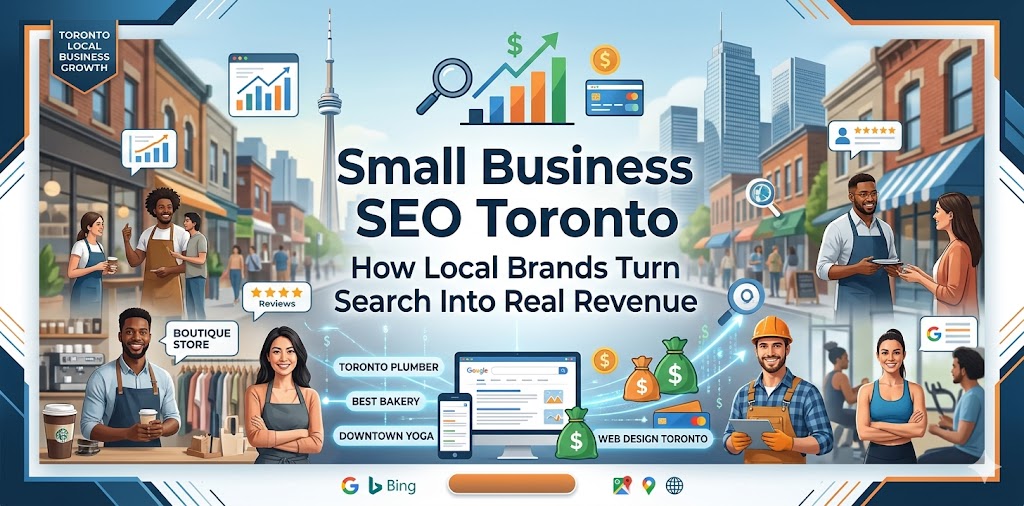
Best Small Business SEO Toronto Strategy for Local Growth
If you want consistent results, your strategy needs structure.
A proper Best small business seo toronto approach focuses on:
- Local Service Pages (Not Just One Website Page)
Instead of one generic page, create:
- SEO Services North York
- SEO Services Scarborough
- SEO Services Etobicoke
This increases your visibility across different areas.
- Google Business Profile Optimization
Most small businesses underestimate this.
Your profile should include:
- Accurate categories
- Services listed clearly
- Real photos
- Weekly updates
This is where most local leads come from.
- Review System (Not Random Reviews)
Consistency matters more than volume.
Create a simple process:
- Ask every happy customer
- Send a direct review link
- Respond to every review
This builds trust and improves rankings.
Best Small Business SEO Toronto: Website Optimization That Converts
Ranking is step one. Conversion is what matters.
Your website should:
- Load fast (especially on mobile)
- Clearly explain services
- Show trust signals (reviews, testimonials)
- Have strong call-to-action buttons
From my experience, small changes here can double leads without increasing traffic.
Content Strategy That Brings Local Traffic
Content shouldn’t just exist—it should attract the right audience.
Focus on:
- Service-based pages (high intent)
- Location-specific content
- Real customer problems
Example topics:
- “Cost of plumbing services in Toronto”
- “How to choose a contractor in North York”
- “Common issues homeowners face in Scarborough”
This type of content performs better than generic blogs.
Local Insight: How Toronto Customers Actually Choose
After working with businesses across the GTA, here’s what I’ve noticed:
- People don’t scroll much
- They trust reviews more than websites
- They call the first few options they see
- They compare quickly and decide fast
That’s why being visible in the right place matters more than being everywhere.
Common SEO Mistakes Small Businesses Make
I see these regularly:
- Targeting broad keywords only
- Ignoring Google Business Profile
- No location-based pages
- Weak or no reviews
- Slow websites
These hold back growth even when SEO is in place.
How Long Does Small Business SEO Toronto Take?
Let’s be realistic.
From what I’ve seen:
- Month 1–2 → foundation and setup
- Month 3–4 → visibility improvements
- Month 4–6 → traffic growth
- Month 6+ → consistent leads
SEO builds over time, but once it works, it keeps working.
What Real SEO Success Looks Like
When everything is aligned:
- You show up in local searches consistently
- Calls and inquiries increase
- You rely less on paid ads
- Growth becomes predictable
This is what small business SEO Toronto should deliver.
Best Small Business SEO Toronto: The Competitive Advantage
The businesses that win locally aren’t always the biggest.
They’re the ones who:
- Understand their audience
- Focus on local intent
- Stay consistent with SEO
- Build trust over time
That’s what creates long-term results.
Conclusion
If your business isn’t getting leads from Google, the issue isn’t just visibility—it’s strategy.
At Peak Rank, we help small businesses across Toronto turn search traffic into real customers by focusing on what actually works.
If you want SEO that drives calls, not just clicks, it’s time to fix what’s missing.
FAQs
How long does small business SEO Toronto take to work?
Most businesses start seeing improvements within 3–4 months, with consistent leads developing over 6 months depending on competition.
What is the Best small business seo toronto strategy?
Focus on local SEO, Google Business Profile optimization, strong reviews, and high-intent keywords.
Can small businesses compete with larger companies in SEO?
Yes. Local SEO allows small businesses to compete effectively by targeting specific areas and customer intent.
Do I need a website for small business SEO Toronto?
Yes. While Google Business Profile helps, a website strengthens authority and improves long-term rankings.
How do I get more leads from SEO?
By targeting the right keywords, improving website conversion, and building trust through reviews and content.